
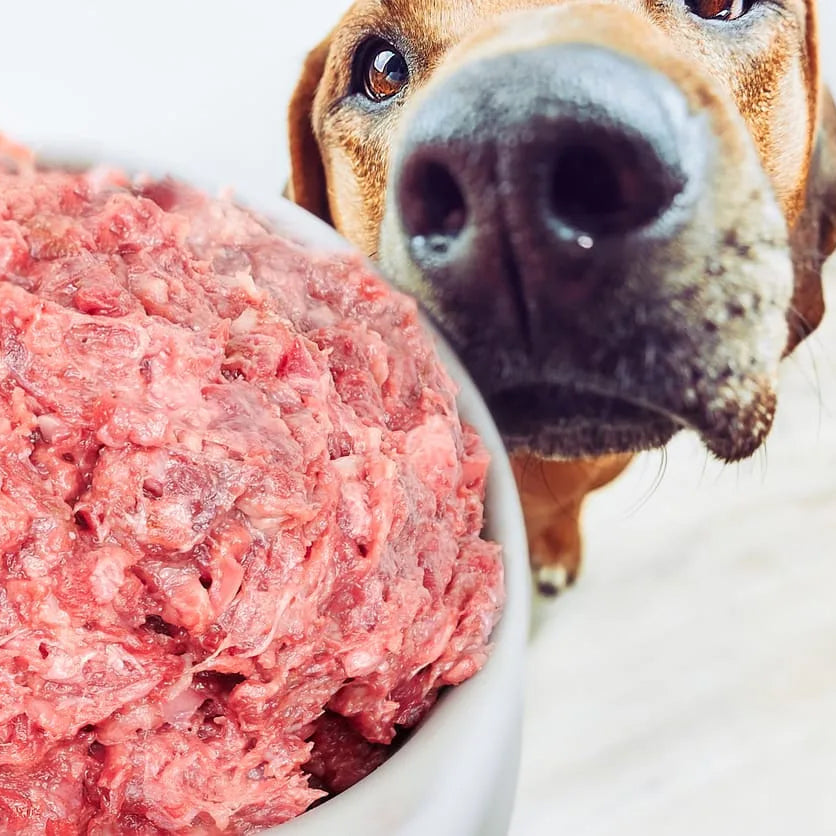
Transitioning to a Raw Diet (Without Stress)
Switching your dog from kibble to a raw food diet is one of the best things you can do for their health — but it’s important to do it the right way. Transitioning thoughtfully helps your dog’s digestive system adjust, minimizes any temporary discomfort, and sets you both up for success.
At Otto, we’ve helped countless dogs make the switch. Here’s exactly how to do it, step-by-step.
Step 1: Understand That a Transition Is Normal
Just like when humans make a big dietary change, your dog’s body needs time to adapt. Changes in stool consistency, appetite, and energy are normal in the first week or two. Don’t panic — it’s all part of the healing process.
Step 2: Choose Your Transition Style
There are two main ways to switch:
Gradual Transition (Recommended for Most Dogs)
- Days 1–3: Feed 75% of their old food + 25% raw.
- Days 4–6: Feed 50% old food + 50% raw.
- Days 7–9: Feed 25% old food + 75% raw.
- Day 10+: 100% raw!
(This is the gentlest approach, especially for older dogs or dogs with sensitive stomachs.)
Immediate Switch (Cold Turkey)
Stop feeding kibble and start feeding 100% raw on Day 1.
(Some healthy adult dogs — especially those with strong digestion — can handle a full immediate switch with no problems.)
Step 3: Start Simple
In the first week, keep meals simple.
- Feed one protein source (like chicken or beef) to allow the digestive system to adjust.
- Stick to muscle meat, bone, and a small amount of organ at the 80/10/10 ratio.
- Avoid adding too many extras like supplements, veggies, or treats until your dog is fully settled.
Step 4: Monitor and Adjust
Watch your dog carefully during the transition:
- Stools: Soft or slightly loose stools are normal in the beginning. Extremely watery diarrhea may indicate you’re moving too fast — slow down if needed.
- Energy: Some dogs have an energy boost immediately; others may feel a little tired as their body detoxes.
- Appetite: A slight appetite dip is normal; most dogs adjust quickly.
Tip: Always make sure your dog has access to fresh, clean water!
Step 5: After the First Week — Introduce Variety
Once your dog is comfortably eating raw, start rotating protein sources to give them a range of nutrients. Beef, chicken, turkey, lamb, duck, and fish are great options.
A variety of organs (liver, kidney, spleen) should also be included as you move forward to keep meals truly balanced.
Final Tips for a Smooth Transition
- Feed meals at room temperature, not cold from the fridge.
- Stick to a feeding schedule (no free-feeding).
- Be patient and consistent — trust the process!
- Celebrate the wins — better digestion, cleaner teeth, shiny coat, and a happier, healthier dog.
At Otto, we make raw feeding easy, safe, and accessible — delivering fresh, pre-portioned meals that follow the optimal 80/10/10 balance. When you feed raw, you’re not just changing your dog’s diet — you’re changing their life.
Ready to make the switch?
We’re here to help every step of the way.
Read more
Dogs were built for raw — and at Otto, we deliver it just right. Our meals follow the 80/10/10 formula of fresh muscle meat, bone, and organ, offering the perfect balance for stronger bodies, shini...
Worried about bacteria, bones, or balance? Don’t be. Learn the real facts about raw food — and why it’s the best choice for your dog.